Pushing and Pulling Film, Beyond Exposure | Peter Farrar Books Understanding How Push and Pull Techniques Redefine Film’s Tonal Behaviour
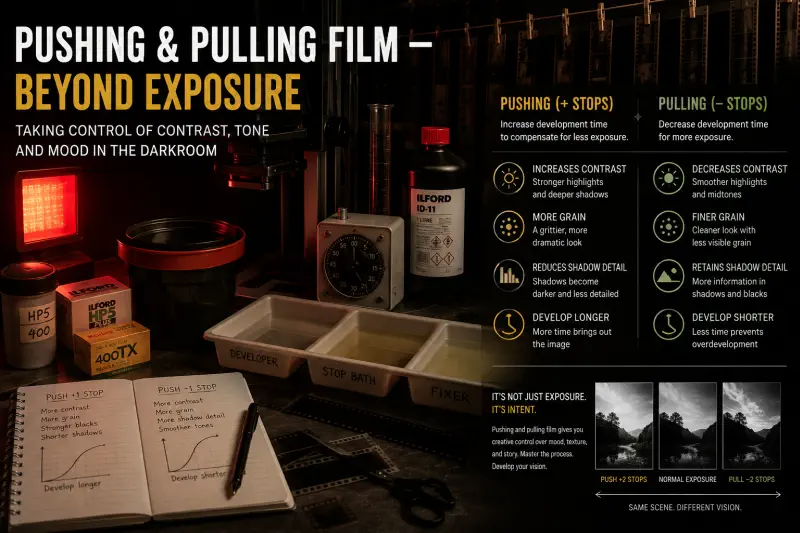
Pushing and pulling film is often described as a technical correction for exposure mistakes, but that explanation barely scratches the surface. These techniques are really about reshaping the way film interprets light, tone, and emotional atmosphere. When you decide to push or pull, you are not simply adjusting brightness. You are guiding the entire character of the image before it even exists.
The Core Idea
Every film stock has a native sensitivity, usually referred to as its box speed. When you push or pull, you intentionally tell the camera a different sensitivity than the one the film was designed for. You expose the film based on that lie, and then you compensate for it during development. The result is not the same as shooting at the correct settings. It creates a new visual identity with its own mood and tonal behaviour.
What Happens When You Push Film
Pushing film begins with underexposure. Less light reaches the emulsion, and the development time is extended to make up for that lost information. The important truth is that development cannot restore detail that was never captured. This is why pushed film shows stronger highlights, weaker shadows, increased contrast, and more visible grain. The process exaggerates the difference between bright and dark areas, giving the image a punchy, gritty energy.
Why Pushed Film Feels Gritty
In a pushed frame, highlights surge ahead during development while shadows struggle to keep up. This imbalance creates hard transitions, deep blacks, and dramatic tonal shifts. The overall impression feels raw and emotional, almost documentary in spirit. It is a look that embraces imperfection and intensity.
What Happens When You Pull Film
Pulling film works in the opposite direction. You begin by giving the film more light than it technically needs. Development is then shortened to prevent the image from becoming too dense. This produces smoother tonal transitions, lower contrast, more highlight detail, and finer grain. Pulled film often feels calm, gentle, and controlled, with a softness that suits subjects requiring subtlety.
How the Tonal Curve Changes
The deeper truth behind push and pull techniques is that they reshape the tonal curve itself. Pushing compresses the shadows and expands the highlights, creating a harsher contrast profile. Pulling lifts the shadows, restrains the highlights, and produces more graceful transitions. These shifts are why the emotional tone of pushed and pulled film feels so different, even when the subject matter is the same.
Real Use Cases
Pushing is a natural choice for street photography and night scenes. It allows faster shutter speeds and handles low light while producing a cinematic, contrast heavy look with expressive grain. Pulling is ideal for portraits because it protects skin tones and softens harsh shadows. It also works beautifully in bright sunlight, where it helps preserve highlight detail and can give colour film a pastel quality.
The Most Common Beginner Mistake
Many newcomers assume that pushing film perfectly fixes underexposure. It does not. If the shadows never captured detail in the first place, no amount of development will bring it back. Pushing only amplifies what is already present, not what is missing.
Different Film Stocks Behave Differently
Black and white film is the most flexible and responds beautifully to pushing, often turning grain into an expressive part of the image. Colour negative film handles overexposure well and is usually better suited for pulling, though pushing can introduce colour shifts. Slide film is the least forgiving and offers very little room for either technique.
Development Shapes the Final Image
In digital photography, editing happens after the fact. In film, development is part of the exposure itself. Push and pull decisions influence the density of the negatives, the structure of the contrast, and even how well the final scan can be interpreted. Half of the creative process happens in the darkroom or the lab.
A Creative Strategy
Instead of treating push and pull as emergency fixes, think of them as creative choices. Decide whether you want drama or softness, realism or stylisation, smooth tones or gritty texture. Pushing brings intensity and tension. Pulling brings subtlety and calm. The choice sets the emotional direction of the image long before you press the shutter.
Consistency Matters
When you commit to pushing or pulling, the entire roll must be exposed at the same ISO. Development affects every frame equally, so mixing exposures will lead to unpredictable results.
Final Philosophy
Pushing and pulling film is not about correcting mistakes. It is about designing the emotional tone of your photograph from the very beginning. This is one of the reasons film still matters. It forces intention, commitment, and a deeper connection to the image you are creating.

Technical Mastery, Optics and Digital Workflow
Leave a Comment