Mastering the Architecture of a Great Landscape (Part One) Foundations, Form, and the Principles That Shape Lasting Design
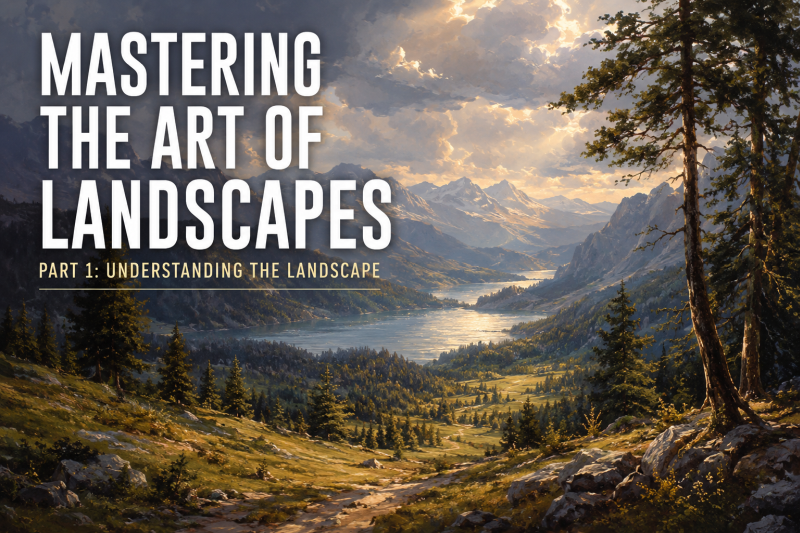
In Part 1, we reframed the Foundations, Form, and the Principles That Shape Lasting Landscape Photograph in Part 2 next week we do deeper into the subject.
Most amateur photographers think a great landscape is about being in the right place at the right time. While a stunning sunset helps, a professional grade image is built, not just found. It’s the result of three specific pillars working in harmony: Composition, Light, and Precision.
When you're standing in front of a sweeping mountain range or a rugged coastline, the sheer scale can be overwhelming. The difference between a photo that feels "flat" and one that feels like an experience often comes down to how you handle the technical math behind the beauty.
The Geometry of the View: The Rule of Thirds
We’ve all heard of it, but few use it to its full potential in landscapes. By placing your horizon line on the upper or lower horizontal third, and your primary subject (like a lone tree or a jagged rock) on a vertical intersection, you create visual tension.
A centred horizon often "splits" the photo in a way that feels stagnant. Moving that line forces the viewer's eye to travel through the frame, creating a sense of distance and scale that a centred shot simply can't achieve.
The Exposure Paradox
In landscape photography, your camera is often lying to you. Because the sky is significantly brighter than the ground, a standard "Auto" exposure will either give you a beautiful sky with a pitch-black foreground, or a detailed foreground with a "blown out" white sky.
Mastering the Exposure Triangle, the relationship between ISO, Shutter Speed, and Aperture, is where the magic happens. But even then, there is a secret to balancing that extreme contrast that goes beyond just turning a dial.
The Quest for Infinite Sharpness
This is where many photographers struggle. You want the wildflower three feet in front of you and the mountain peak ten miles away to both be tack-sharp. If you focus on the flower, the mountain blurs. If you focus on the mountain, the flower blurs.
This is the challenge of Hyperfocal Distance. It’s the mathematical "sweet spot" in your frame that maximizes your depth of field. Getting this wrong is the #1 reason landscape prints look "soft" when blown up large.
The Missing Piece
You can have the perfect composition and the right gear, but if you don't know the specific sequence to lock in these variables, you'll always be "fishing" for a good shot rather than "manufacturing" one.
There is a specific, "right" way to calculate your focus and balance your light that ensures every element of the landscape is rendered with cinematic clarity.
How would you do it? Do you focus a third of the way into the scene? Do you expose for the highlights or the shadows? Drop a comment below with your current workflow, and next week, I’ll be doing a full reveal on the exact technical steps to achieving "The Perfect Exposure" every time.
Slow down and take your time, master what you have and follow my posts, buy the book the last book you will ever need, The Complete Photography Field Guide

The only guide that covers technique, workflow, business, and UK & US photography law in one book
Leave a Comment