ITIL 4 in Practice: What Companies Expect vs Real Service Management Leadership
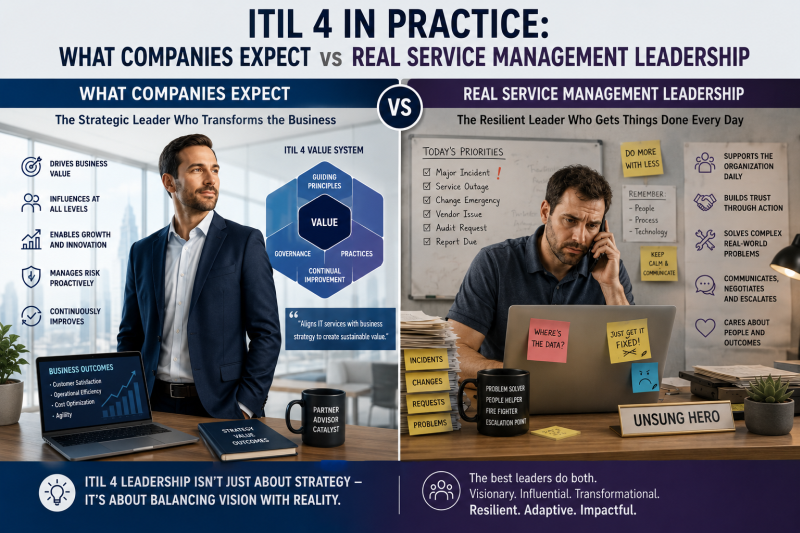
ITIL 4 is often presented in interviews as a structured, best practice framework for delivering IT services. In theory, it is clean, logical, and process driven. In reality, service management (ITSM) is far more dependent on leadership, culture, and execution than any framework alone.
This gap between expectation and reality is where most service desks succeed or fail.
What Companies Expect in Interviews
When hiring for service management roles, organisations typically look for technical mastery of the ITIL 4 lifecycle:
- Strong understanding of ITIL 4 practices and Service Value Streams.
- SLA management and precise reporting metrics.
- Incident, problem, and change control knowledge.
- Focus on CSI (Continual Service Improvement).
- Customer centric service delivery models.
These are important benchmarks, but they only represent the "manual." They don't represent the "driver."
The Reality: Leadership Drives Everything
From a Service Manager’s perspective, the stability of a service desk is not complex to achieve, but it depends heavily on leadership.
Building trust with a team is the first step in effective management. When established correctly, trust becomes the foundation for performance, communication, and long term success. With the right approach, alignment can be built with a team of any size in under four weeks. This comes from consistency, fairness, and genuine respect for people.
Proven leadership approaches, such as those outlined in Leadership: The Culture Fix, make it significantly easier to establish credibility early in your tenure.
Stabilising the Service Desk
Once trust is established, stabilising the service desk becomes a matter of logistics:
- Clear SLA focus and visibility for the entire team.
- Aggressive reduction of ticket backlogs.
- Consistent, documented processes for incident handling.
Problem Management and Root Cause
With a stable service desk, the volume of recurring issues reduces. This creates the breathing room required for proactive Problem Management, where ITIL 4 begins to deliver its highest business value.
Continual Improvement and Automation
Stability allows CSI (Continual Service Improvement) to move from a theory to a daily practice. This is where modern tools like Microsoft 365 and Power Automate play a key role, reducing manual workloads and freeing up your team for high value projects.
Final Thought
ITIL 4 provides the framework, but leadership determines whether it actually works.
When culture, trust, and structure are aligned, service management becomes simpler, more effective, and far more valuable to the organisation.
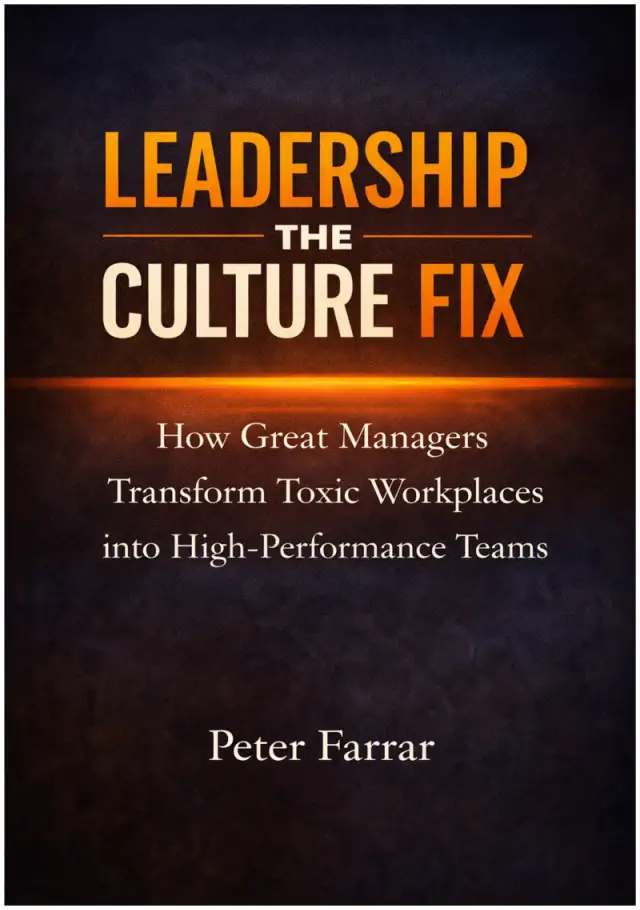
Leadership is not a perk; it is a profession. Learn how to develop managers who build trust, capability, and long-term performance.
Leave a Comment