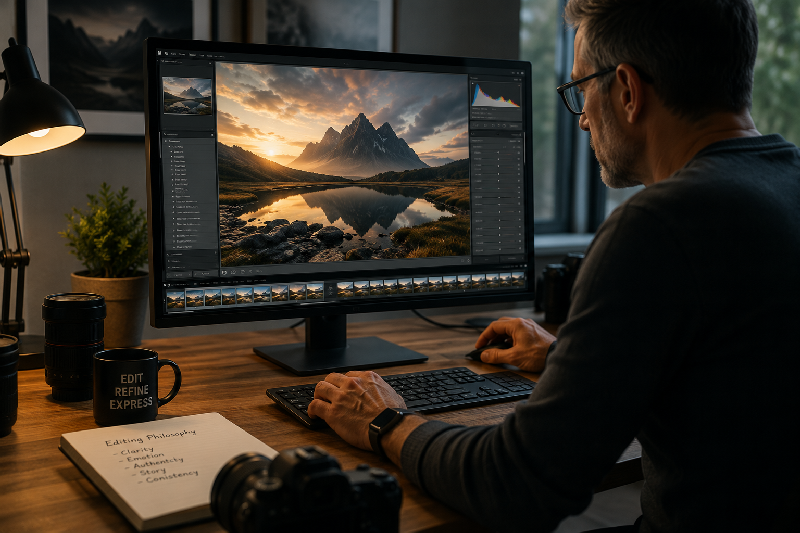
Editing Philosophy
Many photographers believe the work ends when the shutter clicks, but that is only the first stage of creating an image. Photography is a two part process. The camera captures the raw material, while editing refines the light, colour, contrast, and composition into the photographer's final vision. Trying to achieve perfection in camera is admirable, but thoughtful post processing is where an image reaches its full potential. Editing should never be about rescuing poor photographs. It should be about revealing the best version of a well captured image.
The foundation of my editing philosophy is subtlety. Every adjustment should have a purpose. It is easy to push sliders until colours become unnatural, shadows lose detail, or sharpening introduces distracting artefacts. Good editing is rarely about making dramatic changes. It is about enhancing what was already there. I aim to preserve realistic colours, maintain natural light, and guide the viewer's eye without making the editing itself obvious. If someone notices the processing before they notice the photograph, I have probably gone too far.
Editing also means stepping back and viewing your work with fresh eyes. After spending time behind the camera, it is easy to become emotionally attached to an image and overlook its weaknesses. Taking a break before editing, or revisiting the photograph the following day, often reveals distractions, awkward crops, or colour imbalances that were not obvious at first. Comparing edits with the original RAW file also helps ensure that every adjustment genuinely improves the image rather than simply making it different.
The final principle is knowing when to stop. Modern editing software offers endless creative possibilities, but more adjustments do not always produce better photographs. There comes a point where additional edits begin to reduce realism and character instead of enhancing them. My goal is for viewers to appreciate the subject, the light, and the story rather than the editing itself. Successful editing feels invisible. It strengthens the photograph without drawing attention to the process behind it.
Photography is the story I fail to put into words.
— Vivian Maier
Leave a Comment